30 October 2008

Autumn in Provence with Bruno Ungaro


With the encroachment of cold weather upon us, I have become fascinated by slow cooking meat into tender, savory stews. In this post I shall treat my wonderful, loyal readers to the best meal of my Provençal cooking course with renowned Chef de Cuisine Bruno Ungaro. Ungaro has been featured on Rachel Ray's TV show's feature on Provence, and he hosts a weekly cooking show by radio in addition to running his famous and magnificent restaurant in downtown Aix-en-Provence, L'Amphytrion. Most importantly, as my Manhattan kitchen has many shortcomings when it comes to space, no special equipment is necessary in the preparation of this feast. The only requirement is to consider dinner a few hours earlier than normal, and the results are well worth the effort!

The meal is presented in the order in which you will need to cook it. It took our class a little under 3 hours (with wine-tasting breaks) to put it all together, but the timing is so well planned that as soon as the appetizer is ready, you can simply eat and forget about rushing back to fidget in the kitchen. This meal is about leisure: a Provençal way of life.

Provençal Lamb Stew
(with apologies to Matthew Knouse for being so slow about it)

Instructions as to the meat:
- go to a reputable butcher
- look for a fatty, cheap cut of meat, cut off the bone for this preparation
- 1/2 pound per person should suffice

Unfortunately, I forget what cut of lamb Bruno used, but something from the leg or the shoulder should do well.

For 2-3 pounds of meat:
  • Trim off most of the excess, hard layer of fat on the meat (if any)
  • Cube into large, bite-size chunks
  • Chop 3 carrots, 1 large onion, and one head of garlic, not too finely.
  • Add the vegetables first to a large pot, cooking it over medium heat with olive oil, salt, and pepper to taste, until the onions have gone transluscent and the carrots have begun to soften
  • Add the pieces of lamb to the pot, turning the heat up to high, so that the pieces sear on all sides
  • Turn the heat right back down to low, and add an entire bottle of red wine (something from the Côtes du Rhône or Provence obviously compliment this recipe the best). Stir in a heaping tablespoon of black tapenade, and if necessary, add water so that the meat is completely covered with liquid.
  • Cover the pot with a lid, turn the heat down to as low as it goes, and cook it "slowly and gently" (Bruno says, "lentement et doucement") for 2-3 hours.
By the time it's ready the kitchen will be filled with the intoxicating smell of wine-braised meat. Eat with a warm baguette to sop up all the juices.

To turn this into a 3-course meal, like we did during Bruno's class, as soon as the stew has been set to simmer, prepare the dessert, which will need to be chilled for at least an hour:

For dessert we had the most fabulous Mousse au Chocolat:
  • In a heat-proof mixing bowl over a pot of boiling water, melt 250 grams of a dark chocolate bar.
  • Incorporate 100g. of unsalted butter with a spatula
  • Taking the mixture off the stove, and mix in 3 egg yolks.
  • In a separate bowl, beat 6 egg whites with 50g. of icing sugar until the egg whites stiffen (it's much easier if you do this with a hand mixer)
  • Delicately, incorporate the egg white mixture into the melted chocolate
  • "Perfume" the mixture - that is, add a few drops - of Grand Marnier liqueur
  • Fill small mugs or tea cups with the mixture, and let it chill for at least an hour in the fridge.
With the meat now simmering away to tender bliss, and the chocolate mousse chilling into a frozen dream cloud, now focus on the appetizer, which will be ready to eat enjoy just as the smells of the Lamb Provençal start to drive you mad with desire:

Chèvre Tartine
  • In a small bowl, combine 2 minced cloves of garlic, 1 log of chèvre (goat's cheese), and a small pot of crème fraiche
  • Cut a loaf of rustic peasant bread into large slices, and smother each one generously with the chèvre mixture
  • Decorate each slice with a whole sprig of rosemary (which looks festively like a Christmas tree on a white, snow-like background)
  • Place the slices of bread into a pre-heated oven at 375˚F for about 15 minutes, or until the chevre starts to bubble and turn golden brown.
  • Serve the tartine with a salad of thinly sliced endive and a homemade vinegrette of balsamic vinegar (whisk together 3 Tb. balsamic vinegar, 1/4 C. olive oil, salt and pepper to taste)
Now you start eating! With careful planning, this meal can now look after itself. Once you've finished your appetizer, the main should be ready to go, and the mousse should be perfectly chilled after a leisurely feast topped off a red wine from the Côtes du Rhône.

19 October 2008

Dirty Martinis: A Review of Dirty Sue

You are looking at a professional dirty martini drinker. I was intrigued when Eric Tecosky, cofounder of Dirty Sue, offered to send me a bottle of his premium blend olive brine, promising to change my mixology method forever. His website features testimonials of celebrities praising this product for filling a void in the bartending market. While I do not think Dirty Sue replaces olive brine altogether, it is an interesting and valuable addition to any bartender’s liquor cabinet.

A dirty martini tasting party was promptly organized with a panel of like-minded friends in order to gain the broadest spectrum of tastes and opinions. I gamely tried both gin and vodka varieties, using Plymouth Gin and Stolichnaya Vodka. Plymouth is said to be the style of gin called for in the original recipe for a martini; it uses fewer botanical flavors than its cousin, London Dry Gin. Real olive brine from pitted green olives purchased at a gourmet pickle and olive store at 86th Street and First Avenue in Manhattan stood as the challenger to Dirty Sue. Some drops of Martini-brand dry vermouth were swirled around in each glass to give our martinis’ dirtiness the veneer of the classic’s respectability. Once the formalities were dispensed with, the real order of business for the evening began:

GIN & OLIVE BRINE

Tasted soapy, as the salty astringency of brine drowned out the subtle flavors of gin. No requests for a second round.

GIN & DIRTY SUE

For a true gin martini-lover, this is a way to make things dirty. The botanicals in the gin came through, with Dirty Sue adding a light complementary flavor of salt and olive. Truly an aficionado’s drink.

VODKA & OLIVE BRINE

The typical recipe for a dirty martini, it is a drink with heft that quenches an appetite, although drinking it on an empty stomach is not recommended. A silver bullet for salt cravings.

VODKA & DIRTY SUE

Very clean and subtle. It lacks the meatiness of regular olive brine, but the olive flavor does emerge triumphant. As Dirty Sue is twice distilled, the martini appears crystalline, without the characteristic cloudiness of a dirty martini.

IN CONCLUSION

Dirty Sue has the potential to make a very sophisticated drink, squeezing into niches where olive brine otherwise would be too brutal on the palate. It will not replace olive brine in my usual Stoli dirty martini because it lacks the satisfaction of brawn and meat; I order a dirty martini when I crave a liquid meal, a hunger that Dirty Sue does not quite gratify. Notably however, with Dirty Sue gin-lovers can enjoy their martinis dirty too – and I can’t wait to add it to a Bloody Mary. When choosing between olive brine and Dirty Sue, the difference lies in the desired type of drink: whether full-bodied or refined, both have their place and time. I will look for Dirty Sue in specialty, higher-end bars, where I hope that its flexibility to add saltiness to unexpected drinks will be explored and enjoyed.

13 October 2008

Per Se Countdown


Marcus surprised me today with a reservation to Per Se! We will be celebrating both my own birthday and his, as we're only 4 days apart. We have been once before, in July 2007, and it was without question the best meal of our lives. I am especially excited to try one of their winter menus, with its promise of lots of red meat and hearty flavors.

06 October 2008

Inspiration for Autumnal Aphrodisiacs


Apples are back in season!

I'm looking forward to:

Apple cider
Baked apples
Apple pie
Apple cocktails
Apple rakija
Latkes with applesauce

The Honeycrisp variety are my favorite this year as they are tart yet sweet, and always as crisp as biting into a frozen popsicle.

Yellow Grape Tomatoes


This time in Provence last year...

Autumnal Aphrodisiacs

There’s nothing quite as welcoming as a well-conceived cocktail after a long day. As the weather turns crisp, the warming effect of alcohol becomes especially comforting. Invite friends and take an evening to unwind with a reinvented happy hour.

Apple Crisp
Serves 4


- 1 tart, crisp apple, like Granny Smith

- Gin (Tanqueray has subdued floral and fruity notes that fit this drink perfectly)

- 1 small bottle of St. Germain liqueur (relatively new on market - flavors of apple, citrus, and even lychee!)

- 1 pint apple cider

- 4 large tumblers or “rocks” glasses


• Wash and cut the apple into 8 wedges

• Place two wedges of apple in a glass, fill rest of the way with ice cubes

• Fill the glass a quarter to a third full of gin, depending on desired strength

• Add 2 splashes of St. Germain, about 2 teaspoons

• Fill with apple cider, and mix with the end of a teaspoon or chopstick


After consuming the drink, the slices of apple at the bottom of the glass become frozen, intoxicating snacks. Serve with a cheese platter (Roquefort, sharp cheddar, brie), more slices of apple, and French baguette warmed in the oven.

As guests linger after savoring their drinks, consider making supper together by repeating many of the flavors from the cocktail. This recipe is for the world’s most tender pork chops, finished with a homemade applesauce. Serve alongside wild and long-grained rice simmered in chicken broth instead of plain water for a complete meal.

Pork Chops with Pan Apple Sauce
(with thanks to Tyler Florence, but my tweaks make it even better!)
Serves 4

Pork Chops:
- 4 extra-thick, bone-in pork chops (about 1 pound each)
- 1 bunch of thyme
- 1 can of apple concentrate, thawed
- ½ cup brown sugar
- 2 tsp. whole black peppercorns
- 1 cup Kosher salt
- 2 Tb. olive oil

Spiced Apple Sauce:
- 3 tart, crisp apples, like Granny Smith
- ¼ cup red currants
- 2 tsp. brown sugar
- ½ tsp. whole cloves
- 1 tsp Dijon mustard
- ¼ tsp. ground cinnamon
- 1 lemon
- 2 Tb. butter

To make the pork:
• Preheat oven to 350˚F
• For unbelievably tender and flavorful meat, make a brine by filling a large mixing bowl with a gallon of water, ½ cup brown sugar, black peppercorns, 4 sprigs of thyme, apple concentrate, and 1 cup of Kosher salt. Add the pork chops, cover with plastic wrap, and let it sit in the fridge for anywhere from 30 minutes up to 2 hours
• When ready, take the pork out of the brine and pat dry with paper towels
• In a large frying pan with a drizzle of olive oil over medium-high heat, brown the chops on each side for 4 minutes
• Lay the pork in a baking pan, and cover each with a sprig of thyme from the brine
• Bake in the oven for 30 minutes
• Let the meat sit for 10 minutes
• Serve 1 pork chop smothered in applesauce per person, with rice on the side as a perfect accompaniment

To Make the Sauce:
• Start the sauce 5 minutes before the meat comes out of the oven
• Core, deseed, and cut the apples into 8 wedges
• Using the same pan as for the meat, melt butter over medium heat. Add the apple, currants, cloves, mustard, cinnamon, 2 tsp. of brown sugar, and juice of one lemon to make the accompanying applesauce
• Simmer for 10 minutes, until the apples begin to break down. Before serving the sauce, discard the whole cloves


02 October 2008

In Honor of Janet Adam Smith

Janet Adam Smith: mountaineer, comic versifier, literary critic, and Marcus' granny. Also, a legendary hostess who understood the value of the civilizing institution of cocktail hour. Tonight I raise my glass to her memory as I enjoy her favorite: Canada Dry Ginger Ale and whiskey, ice cold. Without the benefit of her wit to give the drink a name, I have dubbed it Ginger Whiskey. It is delicious; heathens may like to add a lime to it, but I think it superfluous.


=======>>>


To Janet: may your influence on our drinking as well as our reading (she discovered T.S. Eliot) continue forever more.

01 October 2008

The Perfect Bar


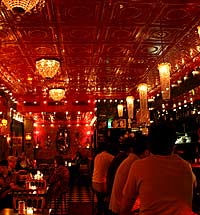
Simone Martini Bar has it all. Its merits are multifaceted, as witnessed by my visual aids: to the left, the outdoor kafana (multipurpose café, a watering hole for talking politics and gossip). To the right, the trendy NYC bar scene that brings out the fabulous glittering side in everyone (this one's for you, Cinnamon Jones!).

1) They consistently have best dirty martinis in Manhattan. Only word of caution: as in any bar, placing a martini order with a waiter rather than a bartender is always a risky business. For best results, go up and make a friend behind the bar.

2) They label themselves as a "martini and espresso bar", which means that the bar is good at any time of day, whether you want coffee, a drink, a meal, or all three!

3) A manageable noise level and unobtrusive music means that you will always be able to have a conversation as you sip that martini.

Atmosphere, better booze, camaraderie: the ABCs of the perfect bar.

28 September 2008

Overheard at the Farmers' Market


"I can't wait for the first frost to hit and kill all the damn tomatoes"

Fall has officially arrived, and I noticed definite fatigue from my friendly farmers at the Sunday market at 91st and 1st Avenue. The quote above came from a woman at the first stall, gripping a a perfectly plump, red specimen dangerously hard. Eighty hours of tomato picking a week can do that to even the best of us.

26 September 2008

Babbo, like you've never read it before

Last night Marcus and I celebrated our anniversary at Mario Batali's famed restaurant, Babbo. In case you didn't know, Batali is the darling of the restaurant world, and particularly in New York, his food is considered to be extraordinary - both crowd pleasing and culinarily innovative. Most critics and fans consider Babbo to be his flagship, the ultimate incarnation of the Batali brand.

Here is the bottom line: Babbo does not live up to its hype. I expected to discover another level to ethereal Italian cooking, and was let down to discover the food was hit-or-miss.

I am getting ahead of myself, however, as Babbo did get some points very right. The atmosphere was polished without being formal, and the service very well trained (although the discipline instilled in the staff was perhaps a little too stiff). Our waiter was friendly and helpful in navigating the menu, even if he pushed the wine on us a bit too fast. The wine list was comprehensive in both price points and varieties; I was particularly impressed by their two whole pages of Super Tuscans. We were both very pleased with our starters: the salumi platter with dense soppressata and aromatic lamb prociutto (although it tasted strong enough to have come from a mutton), and divine carciofi alla romana where the artichoke hearts were actually outshone by the spicy and garlicy outer leaves.

On the other hand, our main courses did not live up to the legend. My "chianti stained pappardelle with wild boar ragu" was disappointing: the shaved pecorino cheese on top, not the sauce, provided its punch of flavor. It was a recipe without finesse: the soffritto was too coarsely chopped and under seasoned so that the flavors (the holy trinity: carrot, onion, celery) did not melt together and intensify. The wild boar was not succulent enough to fall apart meltingly into the sauce, as it should. The tomato did not coat each strand of pappardelle sufficiently, so that as soon as it began to grow cold, the noodles molded together in an unpleasant block. Although the sauce of Marcus' linguini with cockles, salami, and chili was much tastier, I again found the the preparation sloppy: one of my cockles was full of grit. And why would they import them from New Zealand right when shellfish season is beginning for North America?

Worst of all, I awoke in the night with a mild case of food poisoning lasting all day; I believe the long-traveled cockles to be at fault. An update will follow as to whether and how the general manager returns my phone call... I wouldn't mind a token for dinner at another of Batali's restaurant, Casa Mono. With the facts of this little Catalan tapas joint surpassing his Italian flagship, and his recent and well-publicized tour around Spain with Gwenyth Paltrow I wonder if Batali's allegience has changed from Italiano to Español.

14 September 2008

Pleasure Shared is Pleasure Multiplied

I've received a surprising amount of flak in recent months for keeping a blog. At first I found it simply surprising that others would care that much, but then grew perturbed by the closed mindset of these critics. Having grown up in Poland at various points during the 1980s and 1990s, my mother describes the political environment as epitomized by how even the cookbooks lied. Blogs tend to keep people truthful, and allow for the circulation of new ideas that would probably not get space or time in traditional media.

Particularly on such a creative subject as food and drink, nothing is more worthwhile than gathering information across as many sources as possible to keep inspiration flowing as fluidly as a zesty Zinfandel at a cocktail party.

This weekend, for example, I had a ball of a time bartending at a private party in Park Slope. The couple were celebrating their combined 100th birthday, and dozens of close friends had congregated in their gorgeous Brooklyn brownstone to celebrate. These people lived luxuriously and took their hors d'oeuvres and alcohols seriously. A friend of an editor at Food & Wine magazine described a gorgeous vodka and latke party: he hollowed out red new potatoes to serve as shot glasses for the Belvedere. The vodka soaked through, which made the vessels pleasant to munch on afterwards.

Our host proved a conoisseur of single malt Scotch. He broke out some excellent bottles from his collection at the party, my favorite of which was an 18-year-old Bowman. It tasted very smooth and full of peat; like a hand rolled cigarette with excellent tobacco. Back in Eastern Europe, where cigarette fumes are like incense as opposed to bigger air pollution problems, I grew to be very fond of tobacco. I found a peaty single malt gave me the flavor of cigarettes I like, without the congested lungs associated with the latter. Nice. Behind that was an 18-year-old Caol Ila. It was also nicely peaty, but it had the astringency of vodka. Not nearly as smooth. This wonderful man paid me to tend his bar, then sat down and chatted for over the course of an hour about the east versus west coast of Scotland, accompanied by this tasting.

08 September 2008

Food for Thought

"And it became clear to me that things which are subject to corruption are good" (Augustine's Confessions, Book VII, Chapter 12)

Put another way, if things are capable of going bad, they must have been good at some point before. Truly this is the same with food.

Right now in my fridge lurks a container of Duncan Hines Creamy Home-Style Dark Chocolate Fudge icing that I'm sure will long outlive me if I just gave it a chance. This is an example of very bad food, as its ingredient list long with various preservatives testifies. It certainly has already outlasted 3 trips to the farmer's markets and all the produce purchased, all the while lurking in the back of the fridge and intimidating a fresh bunch of radishes into shriveling. I worry slightly whenever I get a craving for this chocolate bad boy in a tub, and I am on the lookout for an easy recipe for chocolate icing to whip up in its place - a recipe preferably that includes a whole lot of perishable food items...

06 September 2008

A Tale of Two Dinners

Manna from Heaven or colossal bomb: two restaurant reviews in and around New York City. Both restaurants had been rated 4 out of 4 stars by the New York Times and topped the Zagat charts, yet only one lived up to its billing. It made me wish restaurant reviewers were more anonymous in this town...

Per Se: Subjective Memories of an Objectively Perfect Supper

After a year of stashing away our change inside an old Glenmorangie scotch box, my boyfriend Marcus and I took our savings to the most expensive restaurant in town, Per Se. Zagat’s concise review, “you’re worth it”, definitely piqued our interest. Their tasting menus were to be the ultimate indulgence of our enormous and curious appetites, and a peek into the lives of the fabulously wealthy who unlike ourselves, did not need to crack open their piggy bank for their dinner. It was hard not to be intimidated the night of our reservation as we dressed up for the evening. A student and a young professional were about to blow a quite substantial sum of money for one night’s experience, and we feared disappointment. Could it possibly live up to our hopes of unadulterated gastronomic bliss?

We held hands as we walked through Keller’s famous blue door, into a cavernous entryway. A dark, Zen-like interior immediately cooled us down from a sticky summer’s night: a sophisticated décor appealing to men in expensive suits. Marcus immediately loved it. The hostess and wait staff greeted us as if they had been expecting us for a long time – I suppose not so surprising given the mandatory 2 month advance notice on the booking. Our worries started to melt away once seated at our centrally located yet private table on the lower level, offering a panoramic view of the southwest corner of Central Park. To our right sat three generations of a family celebrating with tasting menus and many, many bottles of expensive wine. The elderly gentleman who paid for the evening seemed to enjoy it the most. On our left a table of four regulars flitted in and around, greeting each other and the staff with air kisses and laughter. They seemed to hardly taste their meal.

Marcus and I, on the other hand, were eating it all up. The evening started with a vintage year Rosé champagne served from an old-fashioned, wide-bottomed bottle, followed by their signature hors d’oeuvre that I feel epitomizes Keller’s dining experience: a miniature savory ice cream cone presented on a custom, solid silver tray that held the cone upright, like you might find at an ice cream parlor. Ethereally fresh smoked salmon minced and formed into a tiny scoop rested on whipped crème fraîche encased in a thin and crispy brioche cone. It’s been almost a year since I’ve tasted it, and I forget now whether it was chives he mixed in with the salmon, but I’ll never forget its cool, crisp, and creamy texture and the way it melted and then evaporated in my mouth. Yes, food in a three star Michelin restaurant is highly conceptualized, but it doesn’t have to stop being fun at the same time. There is no way anyone could eat this dish with a knife and fork. Keller was like an indulgent uncle, allowing us dessert before dinner.

Full disclosure before heading onto the next course: my last piece of seafood had been a fish stick at age seven. However, going into this meal I knew that if I was ever to overcome my phobia of seafood, it would only come from one of the most extraordinary kitchens in the world. Thus, although I opted out of the show stopping “Oysters and Pearls” with Sterling White Sturgeon Caviar, I devoured with relish the kitchen’s milder play on another caviar classic. They served me tender slices of the sturgeon itself, wrapped up in tiny, light blinis, accented by the smallest dollop of crème fraîche. I hardly allowed Marcus a taste I enjoyed it so much. In fact, and to my great surprise, by our unanimous vote of two the best dish of our entire four-hour meal was the “Crispy Skin Fillet of Royal Dorade” served with sungold tomatoes, summer squash, cipollini onion and marble potatoes with banyuls vinaigrette. I still dream of it. The flesh flaked off into substantial chunks that simply dissolved after a couple chews. The skin had not an excess drop of grease, with the texture of a very thin potato crisp possessing an innate sea salt flavor. It’s an accomplishment that I even remember the vegetable side, which I attribute to the intensity of its pan-roasted flavor.

We both had the “Peach Melba” Foie Gras, which served with peach jelly, glorified Rice Krispies and Melba toast, transported me back to childhood breakfasts of charred bread slathered with butter and jam. A succulent piece of lobster tail meat poached in butter followed. It was the first time I had ever enjoyed this crustacean, and the counterpoint of barely steamed baby peas and carrots served as the perfect counterpoint to highlight the meat’s inherent sweetness. The next plate of duck breast with slow baked beets, red current, jelly, and bulls blood greens in juniper wood aged balsamic vinegar sunk deep into our bones after this lighter fare. It was a pleasure to have a meat I could chew on as I sank even deeper into my hedonistic trance. Marcus and I went our separate ways on the next course, as I had roast lamb with corn, fava beans, polenta, and a fig and truffle sauce, and he couldn’t resist upgrading to a pan roasted sirloin of Blackmore Ranch’s Wagyu beef. We each insisted that our respective dishes won that round.

The five courses of dessert might have just passed me by, save by the sheer stunning skill of their pastry team. They left us with a goody bag of the most decadent, fudgy brownies of my life, which Marcus and I rationed well enough to last for a whole week of dark chocolate paradise. The evening, the meal, was a stunning leap above even what we had fantasized about the past year, to which my limited word allotment cannot do justice – never to be surpassed, except, perhaps until we go back again.


A Meal from Hell: Sinking my teeth into Xavier’s at Piermont

“This will be the perfect romantic weekend!” Marcus was so hopeful. We both desperately needed a break – him from his job, and I from the confines of the city. He pored through guidebooks, train, and bus schedules, using all of his networks and resources to surprise me with the perfect plan. Eventually he settled on Peter Kelly’s restaurant, Xavier’s at Piermont. We had watched Peter Kelly win on the Food Network’s “Iron Chef” reality television competition, and the Zagat review couldn’t have been more complimentary, with a food score higher than Per Se! An extremely rare score of 29 out of 30 for food! Not only was this a sure bet for a candle-lit dinner, but he also had found a cute B&B within walking distance so that we could turn it into an overnight trip. He could hardly believe how both clever and thoughtful he was.

When he had made our reservation for Friday evening, he had already requested the nine-course tasting menu with an accompanying wine pairing. We found it strange, then, when we sat down at our table in the tiny dining room, that the waiter and sommelier audibly whispered, debating whether to check our IDs. We should have known better at that point than to leave ourselves in these tactless and incompetent hands, but we were young (an over-21-type young I might add), and naively assumed the wait staff at such a fancy and expensive restaurant would have our best interests at heart.

Turns out they should have checked our liver function instead of our IDs as they increased the pour count on our wine and cognac with each grimace we made at the food. We were incredibly drunk by the end of the meal as glass after glass was pushed on us. Service could not have been more bored and indifferent. Our waiter could not be bothered to pay me any attention. He turned and walked away from our table in the middle a question I was asking him – twice! He showed up only to rush us into each successive course and glass of wine, urging us to gulp down the last dregs of the previous glass so that he could get on with the next. We were slurring our observations on a remarkably disappointing meal when we stumbled our way to the hotel that night. However, as is often the case with suffering through a traumatic event, we learned some valuable, practical lessons on fine dining:

1. When ordering a tasting menu, always specify your tastes and dislikes ahead of time and send back any dishes that do not cut muster.

Both Marcus and I prefer robust, savory flavors that pair well with red wine. After the meal began with 3 relatively interesting fish courses, we were excited to get to the main, hearty elements of the tasting. Yet the dishes grew progressively more forgettable and tasteless. A piece of steamed cod encrusted in plain, black poppy seeds was followed by a blanched chicken breast that had hardly even been seasoned with salt and pepper. I bit my lip to stop from laughing out loud when the waiter proudly announced, “This is the finest Murray chicken!” We buy Murray-brand chicken at our local store because they are the cheapest humanely raised birds available. The idea that his chest would swell with pride while serving me an unimaginative dish I could have cooked better at home was ludicrous and epitomized this failed dinner. At least that taste of my lipgloss temporarily woke up my bored taste buds.

I had previously assumed that I would always follow the kitchen’s lead with a tasting menu, using the opportunity to expand my palate and try dishes I wouldn’t normally. However, after suffering through 5 fish courses even after mentioning that I wasn’t too fond of fish or seafood, I have decided from now on to take a much more active role in deciding my next tasting menu. Any restaurant worth its grey sea salt will welcome feedback to create an unique menu.

2. Read reviews of restaurants outside of the New York metropolitan area with a skeptical eye.

While I am sure that there are some wonderful destination restaurants outside of New York City, I have yet to meet one. I was shocked at the disparity between the several reviews we had read and the reality of our evening at Xavier’s. I have come to realize that the only way to ensure the quality of a restaurant is the presence of vibrant competition. Xavier's would never have gotten away with such a substandard experience in Manhattan. It would have been more recently reviewed, its substandard quality exposed, and pushed out of the market by much more reliable competitors of the same bracket, such as Jean Georges or Gramercy Tavern.

I also have to consider the possibility that Xavier's does live up to its reviews – but only for special guests, including reviewers who must find it hard to be anonymous and drop by for a surprise repeat visit in such a small, out-of-the-way town. I sincerely hope this is not the case, and that Peter Kelly would never intentionally gamble his reputation while swindling a young couple of both their savings and a valuable Friday night.

3. Choose your dinner partner wisely

Peter Kelly’s magnificently underwhelming dinner would have been unbearable had I not had so much fun rolling my eyes, nudging, and whispering to Marcus about the surprising mistakes we endured at the hands of the wait staff and kitchen. The restaurant seemed frayed at the edges with lack of attention to details: no one folded our napkins when we got up to use the restroom, and we were given the wrong cutlery for a course. Since Marcus enjoys the pampering and attention to detail of a fancy restaurant as much as I do, we could marvel at this evening’s incompetencey together, turning it into an extraordinarily funny-if-it-wasn’t-so-expensive joke. We laughed about each different observation as we supported each other all the way to our bed. Dining and food is ultimately a social act, and although I still feel gypped out of a great meal, at least I didn’t waste my time as well.

[These and future restaurant reviews can be found on http://www.at-largemagazine.com/]

03 September 2008

Simple Vegetarian Pleasures

Day 2 of the Detox Diet.

One might imagine that trying to rebalance the body would require a bland palate of steamed vegetables and fish. Not so in this household.

Dinner was thrown together with the treasures of yesterday's market:

ELOTE ASADO - a stolen recipe from our favorite Mexican down the street. Roast the corn inside its husk in a 375˚ oven for 25-30 minutes. After allowing it to cool for a few minutes, peel back the husk into a convenient eating handle, pull off the silk strings at the tip of the ear in one tug. Season with a chili/paprika mix (a fajita powdered mix works really well), and grate cheese (I used parmesan here) over the still-hot cob to melt. Finish with several squeezes of lime.

TURKISH BREAD, AJVAR, FETA, AND TOMATO AND RED ONION SALAD - the Turkish market around the corner is a real find (92nd and 1st Av). Their bread is great, and I've already rhapsodied over ajvar in an earlier post, so I won't repeat myself here. Suffice it to say that simplicity is bliss, and that all this with a squeeze of lemon is even better.

...Today at Gourmet Garage NY Strip Steak was $11/lb on sale, Berkshire pork chops $5/lb... this diet may be over sooner than it began! More later.

01 September 2008

Post-DNC Eats: Vegetables are in again!


The Democratic National Convention inspired many of us to improve both ourselves and our country. To be better citizens. To make our voices heard. To eat better.

Campaigners and conventioners are notorious for both their long hours and poor diets: chips, donuts, and endless cups of coffee with the odd pizza thrown in. I shouldn't have been surprised then to have Marcus coming home craving nothing but raw vegetables. (You can read about his exploits and enjoy photos from his inside-access vantage point on his excellent blog on politics). I quickly hit the farmer's market and we made his recipe:

FEEL-GOOD COUSCOUS
- 1 each red, yellow, and green bell pepper
- 1/2 pint cherry or grape tomatoes, cut in half
- 1 small to medium red onion
- 3 cloves garlic
- 8 oz. feta (this recent batch used Turkish feta, which is less briny and more creamy than the Greek or French styles)
- 2 lemons
- 1 bunch cilantro, washed, and chopped
- 2 cups dry couscous

Removing the stems and seeds, chop the bell peppers into small, bite-size, 1/2 inch pieces. Dice the onion into pieces the same size. Mince the garlic cloves roughly. Boil 2 Liters of water (I highly recommend owning an electric kettle). Just before the water's boiled, toast the couscous lightly in a large skillet, then add the water gradually, letting it cook in the skillet, for about 5 minutes or until the couscous grains have plumped up and are tender to bite.

Put everything into a big wooden serving bowl. Garnish with crumbled feta, cilantro, and lemon wedges.

Namaste

Today, after weeks of Afghan rice and some kind of meat, I had more of the same- only this time it was Indian! 

There is a little place in Kabul that serves some delicious Indian cuisine. For lunch I had Spinach Mutton. The spinach was pureed and had a lovely, subtle aroma of cardamon and cinnamon that gave the lamb a lovely kick. I mixed in some steamed basmati rice and enjoyed! 

I was very excited about the garlic naan I ordered but it was soggy and too chewy. Ew! 

I forgave them for the naan once I (bravely) drank my sweet lassi from the plastic water bottle they put it in. It was only slightly sweet and was a great, soothing finish to a filling meal. 

The lassi bottling technique reminded me of the brandy Serbian grandfathers make and put in 1.5 liter Coca-Cola bottles. Classy!

Until we meet again,

Cinnamon

31 August 2008

A Disappointing Meal at Cipolla Rossa


Being owned by a genuine Tuscan gentleman with such accolades as catering for the Italian Ambassador to the UN more than 200 times, Cipolla Rossa should have been great - but instead it was another mediocre Italian only distinguished by a more interesting menu than most.

Situated on 1st Avenue between 92nd and 91st, the restaurant has transformed its tiny dining room with a bright and pretty copper ceiling. It has the added bonus of being a BYOB joint - at least for now. I had high expectations for the place because its menu was so specifically Tuscan, with a special emphasis on everything to do with wild boar (boar meatloaf, boar prosciutto, parpadelle with wild boar ragu, wild boar sausage...). It should have been a great night out.

Marcus and I ordered the grilled calamari, and two of their daily specials: double cut wild boar chop, and spaghetti with pancetta, wild boar sausage, and red onion (the restaurant's namesake - "cipolla rossa" is a red onion that grows especially around Tuscany). We felt this gave us a good spectrum of their different dishes. We brought along half a bottle of 2006 Santa Cristina sangiovese we hadn't finished last night with our pasta pomodoro.

The main problem with our meal was that everything was overcooked. The calamari was too charred from the grill and too tough, and the pasta was mushy! I can't forgive an Italian place for overcooked pasta. It's a cardinal sin and the ultimate sign of sloppiness in the kitchen. Marcus's boar chop was nice and rare as he ordered it, but the actually cut was not top quality - a little sinewy. Perplexingly, every dish we ordered was doused in a garnish of dried parsley, which I found detracted from both the flavor and the texture of each dish. Positively, the flavors in the were generally well done - the sauce on the pasta was excellent, and I ended up eating it around the spaghetti.

Cipolla Rossa has unfulfilled potential. The one waiter/host taking care of the small dining room kept on forgetting napkins, but was friendly. I think he and the restaurant are having a shaky start, but if they try a little harder and live up to higher standards in the kitchen, they could do quite well. However, I'm not willing to waste my money in the meantime when I can cook their menu better at home. I recommend Bianca or Falai instead for an authentically Italian meal in NYC.

My No-Fail Meal: Pasta Pomodoro and Green Salad

Every cook has a no-fail meal: comfort food we're really confident cooking anytime. I first started cooking at age 7, while living in Rome. Hence, pasta will always be my comfort zone. My menu is a green leaf and garlic salad with homemade pasta pomodoro. Buon Appettito!

ULTIMATE GREEN SALAD

- 1 head of romaine or red leaf lettuce (washed, dried, torn into bite-size pieces)
- 1 garlic clove
- sea salt & freshly ground black pepper, to taste
- 2 Tb EVOO (extra-virgin olive oil)
- 1/2 C. balsamic vinegar

My mom taught me how to make the ultimate salad, and its greatness rests on the specific way you dress it. She claims to have been instructed by an Italian housewife, who set down in no uncertain terms these mandatory steps:

1. Use a wooden bowl. It is unrivaled for capturing and transferring flavors, particularly garlic. Take a large clove of garlic, and crush it under the handle of your knife. This makes the skin very easy to pull off, and eliminates the need to mince the garlic. Mash the garlic into the bottom of the bowl, swirling its guts all across the wood to allow the bowl to soak up its flavor.

2. Put all your lettuce into the bowl. The two varieties I specified are my favorite, although you can certainly use arugula, baby greens, or any mixture of your favorites.

3. Drizzle the great-quality EVOO over the top, and toss the salad so that every leaf is coated. You may need to add more, based on the size of your salad. Just keep in mind you want it very lightly coated, not drenched.

4. Next add a good few pinches of sea salt, and toss the salad again.

5. Now you drench the salad in balsamic vinegar, and once again toss the entire salad, making sure to scrape the bottom of the bowl to incorporate the pieces of garlic. Finish with some freshly ground black pepper.

I guarantee this is the biggest punch of flavor you will ever taste, especially from a salad! When I have a stuffy nose, I like to add a teaspoon or two of dijon mustard at the end. It clears the sinuses like nothing else.

NO-FAIL PASTA POMODORO

- 1 lb. spaghetti (Barilla's great)
- 42 oz. whole peeled plum tomatoes in a can (look for the Italian "San Marzano" variety)
- 1 small yellow onion, diced very finely
- 3 large cloves garlic
- 4 tiny dried pepperroncino, crushed (or a pinch of crushed red pepper flakes)
- 2 Tb EVOO
- salt & pepper to taste
- a large handful of fresh basil, chopped coarsely
- parmigiano reggiano, freshly grated on top of pasta just before eating.

Put on a very big pot of water to boil. In the meantime, in a 14-inch frying pan, make your soffritto by heating the EVOO and sautéing the onion, garlic, and pepperoncino, seasoned with salt & pepper, over medium-low heat until onion is translucent, and the entire mixture starts to gain a golden color. Only after this point do you add the tomatoes. Turn up the heat to medium, and crush the tomatoes with a potato masher in the pan.

At this point, taste the tomato sauce for seasoning. It usually needs another teaspoon or two of salt and some more pepper. Let the sauce simmer, uncovered, for about 15 minutes. Only stir periodically.

By this time, the pasta water should be boiling. Salt liberally - it should taste like sea water! Add the spaghetti and boil for 3-4 minutes. Why so little? Because the trick is to finish off the pasta in the sauce! After 4 minutes MAXIMUM, use tongs to transfer the still-very hard pasta to the bubbling tomato sauce. Ladle out about 1/2 c. of the pasta water and add it to the tomato sauce. Keep stirring the pasta around the sauce, letting it finish cooking. As soon as the pasta is al dente (meaning it has a good bite in the texture - not mushy at all), turn off the heat and stir in the basil. When you transfer the pasta to a serving bowl and let it sit for 5 minutes, you will be amazed how the quite liquid sauce congeals into the perfect consistency.

Top each bowl with a bit of basil, parmesan, and black pepper

Perfecto!

30 August 2008

Pleasure Reading

Have you ever read a cookbook from front to back? I do, especially when I am either a) hungry with an empty pantry or b) burned out of ideas in the kitchen.

My all time favorite is Mary Contini's Dear Francesca. She was one of the founding members of one of the best Italian specialty food stores in the world, Valvona & Crolla's, and her cookbook-cum-novel explains the principals of Italian cooking with all the love of a Mamma. Having lived in Italy for 6 years (I was born there!), I had always known how good food was supposed to taste. Thanks to Contini, now I actually know how to make it. The biggest game-changer for me was learning to make a soffritto as the base of all my dishes. To build a big and memorable flavor, now I know to slowly sauté (sweat, really) finely diced onion and minced garlic with salt & pepper in EVOO as the base to everything from my no-fail tomato sauce, to chicken noodle soup.

Her book was actually written with the intention of being read cover-to-cover, but I encourage you to read every cookbook this way. I find I am able to pick up subtleties in technique best as I compare recipes, and it's a great way to brainstorm new flavor combinations. The best ones explain their cooking as a single narrative. Try Jamie Oliver, Nigella Lawson, and Nicholas Clee! These hyperlinks take you to my favorite books of theirs.

25 August 2008

Delaware


"August is the best month for eating in Delaware"

My sister and I enjoyed a weekend with the best this cozy state has to offer: politics and peaches.

The state was buzzing the morning after we arrived with the news that Obama announced Joe Biden as his running mate as we made our rounds to the local farmers markets. At the upscale, established Fifer Orchards in Camden we bought everything from wasabi and sesame infused oil, to peach ice cream made from the fresh produce of their orchards. Even though it was a chic foodie establishment, I was relieved that prices had not caught up with those in New York.

Down the road we stopped in an Amish food emporium. Their barbecue smelled tempting, but remembering our imminent dinner plans, we satisfied our cravings with dill-laced havarti and an herb-infused baguette instead.

Staying with our old family friends, Chuck and Jeanine, we talked Delaware state politics (with which Jeanine is involved) while eating freshly steamed corn on the cob, tomato and lettuce salad with a lemon vinaigrette, and barbecued chicken. As Jeanine pointed out, all the produce had never seen the inside of a refrigerator. Dessert was a dense and egg-y chocolate cake she made the day before with an icing that evaporated like cotton candy in our mouths, leaving only molecules of dark chocolate on our tongues. We washed it down with bellinis made from whizzed up peaches and dry prosecco. Breakfast the next morning was waffles with ripe Delaware peaches and blueberries. On our ride home we munched tomatoes picked from a friend's garden, sprinkled with a few crystals of gray salt.

Bliss.

Hungry in Kabul

After a wicked bout of jet lag, I found myself starving in Kabul with no place to go! Luckily, the city is flooded with little bread shops, selling warm, fresh naan the size of small children. They cost 10 Afghanis, or roughly 20 American cents! 

I start by peeling the outer edges and shoving them in my face...it is divine! So warm and comforting and filling. I have found the perfect breakfast- if I ever feel the plain naan isn't enough, I can buy a small tub of cream cheese for 65 cents (some people avoid any dairy products here, but I have not had any issues). 

Though the size of the bread is intimidating- it can be eaten in one sitting. Trust me.  

21 August 2008

Aquavit: An Initial Review


Sexy chef Marcus Samuelsson's restaurant, Aquavit, appeared unexpectedly in the midst of Midtown skyscrapers. I was meeting Emily for a spur-of-the-moment chic dinner in honor of the extension of Restaurant Week.

How fitting for us to choose a foodie-haven restaurant named after Sweden's version of moonshine! For me, 'fine dining' is the culmination of gastronomic bliss while unwinding with friends. No way better to achieve this than by pairing food with interesting and tasty alcohols and wines! Aquavit is all the more remarkable for brewing 14 of their own flavors of the traditional Swedish spirit - delicious.

Aquavit has two dining sections, organized much like Gramercy Tavern: a formal dining room with prix-fixe menus in the back, and a much more accessible (both in location, reservations, and price) front café. I was pleasantly surprised at the comfortable atmosphere in the front café, which rather than trigger my Adverse Midtown Reaction, made us both excited to try something new on the Swedish menu.

The polite yet hip waiter informed us that Aquavit does not actually participate in Restaurant Week, but he spoke with the chef to create a menu to accommodate us with a very boring garden salad and meatballs menu for $35. Actually, the prices were reasonable enough that we eschewed that option, deciding instead to create our own tasting of Sweden. First, we ordered from their deliciously inventive cocktail list ($14/each): a Midtown Martini for me in honor of the neighborhood (cucumber aquavit, dry vermouth, salted cucumber garnish), and Emily celebrated my new post on Leblon with a Cranberry Caipirinha (Aquvit NYC, lime, cranberries).

To start we shared the Crayfish Bisque. It was one of those dishes so dazzling that it boggled our tongues and tastebuds! The creamy broth seemed to be made from crayfish broth and butternut squash. It was spicy like a pumpkin pie. In the middle a giant mystery dumpling supported three large and succulent pieces of crayfish. The texture was even more amazing than the flavor. We could not wrap our heads around the dumpling - the dough part had the consistency of a Chinese bun, yet was savory and complex. The waiter approached our table with a secret smile that knew we were stumped.

"It's white bean purée!" he announced triumphantly. Turned out our "dumpling" dough was actually a mixture of white beans and shimp, cradling slivers of foie gras. This dish captured the genius of Samuelsson: he turned a Scandinavian comfort food classic on its head, making it even more interesting by borrowing ingredients and techniques from other cultures.

For our main course, we both couldn't resist ordering the Swedish meatballs. While it was an improvement over what I have had at the Ikea cafeteria, it was a little boring as Samuelsson colored inside the lines on this one. He served a mountain of slightly dry meatballs over creamy mashed potatoes, complemented by a traditional lingonberry sauce and cucumber salad with dill. Very filling, but his meatballs needed both more breadcrumbs to retain moisture and gravy. It was exactly what we ordered, which after the inspired bisque was disappointing.

I look forward to going back to sample more of the seafood items on the menu. The restaurant is a marvelous dining experience I recommend for its originality and inviting atmosphere. A gourmet experience both in the dining room and on the plate, which in the front café, doesn't have to cost you an entire paycheck.

14 August 2008

Party Food!

Last night Marcus, Frank, Angela, and I celebrated the fabulousness of Joanna and Jessica. They have spent their valuable summer months working with Frank and Marcus to bring a new vision to the RSA (Royal Society for the Encouragement of Arts, Manufacturers and Commerce), somehow keeping everyone organized and on track.

To balance the hot weather with the need for a luxurious party feast, Marcus and my Chicken Caesar Salad was on the menu, accompanied by his delectable cheesy garlic bread. As usual, mojitos were to be had. But they were only the start of the many toasts during cocktail hour! We paired the Caesar Salad first with a blanc de blancs champagne, Comte de Gascogne, to tickle our noses. Transitioning with the heavily spiced chicken, we moved onto a 2006 Beaujolais-Villages, and finally to a very ripe and explicit 2002 Australian Shiraz.

I found it fun to try to pair these three very different wines to the meal. Wine pairing is a lot like using complementary colors. The food and wine should work together to make both elements more vivid in your mouth than if they had been alone. The blanc de blancs didn't work as well here, I picture it better with lighter fare. However, the both reds were great with the spices already in the salad.

For dessert J & J transformed a pavlova (lighter than a meringue!) into a 2-layer cake of beauty, sandwiched with whipped cream and strawberries. The trick is you have to eat it fast, before it melts away.

Selfishly, I must admit that one of the highlights of the evening was finding out I had a reader who was not obligated out of love to read this blog! You go Jess! Here, for you, is my Caesar Salad Dressing (for 6 people):

CAESAR, DRESSED UP.
- 1 oz anchovy paste (about 3 tsp.)
- juice of 4 lemons
- quarter cup freshly grated parmesan cheese
- salt & pepper to taste
- EVOO

Whisk together the first 4 ingredients until smooth. Slowly add EVOO with one hand while whisking all the time with the other until the dressing reaches desired consistency (usually somewhere between a quarter and a third of a cup)

13 August 2008

Salads of the Non-Lettuce Kind

Having been raised by a health freak, salads are of paramount importance to me. Nothing offends me more than a heaping mess of unappetizing iceberg drowned in a chunky store-bought sauce! Done right, salads can steal the show at a meal. While I am huge fan of a simple, crisp and fresh lettuce salad, I have been enjoying the ones without even more. Here are 3 of my favorite concepts:

1) There are vegetables that are delicious, but are hard to eat with a fork (take carrots, radishes, or fennel for example). It's funny how cutting these types up very finely instantly makes them a thousand times better. My favorite recipe right now uses carrots and radishes

CARROT AND RADISH SUMMER SALAD
- 4 carrots
- 4 radishes
- 1 small onion
- 2 crushed cloves of garlic
- half a handful freshly chopped coriander
- 4 Tb balsamic vinegar
- 2 Tb EVOO
- salt & pepper to taste

The key here is how you present it: after peeling the carrots, keep using your peeler to cut the carrots into long thin strips. You can keep the skin on the radishes, but peel it into strips the same way. I like to keep the strips of both veggies roughly the same size. Very thinly slice the onion. Combine the veggies in a large salad bowl and dress with crushed garlic, chopped coriander, EVOO, and salt. Mix this around to coat everything, THEN douse it with several healthy splashes of balsamic vinegar and freshly ground pepper.

This is a very hearty, meaty salad. Great if you're a veggie feeding meat-eating friends.

2) I can't claim credit for this recipe, but I can popularize it! This is Ina Garten's completely fantastic Beets with Orange Vinegrette. I find her flavor combinations here mind-blowing: roasted beets, orange, raspberry vinegar, and red onions. Try adding a handful of chopped basil! It enhances beets' natural sweetness, while the vinegar and the onion give it a great acidic kick in the pants.


3 (15-ounce) cans baby beets, drained
2 tablespoons raspberry vinegar
2 tablespoons freshly squeezed orange juice
3 tablespoons good olive oil
1 1/2 teaspoons kosher salt
1/2 teaspoon freshly ground black pepper
1/2 cup small-diced red onion (1 small onion)
2 large seedless oranges, zested
Segments 2 large seedless oranges
(I suggest a handful of chopped basil added at the end)

Drain the beets and dice into 1/2-inch cubes. Place the beets in a mixing bowl and add the raspberry vinegar, orange juice, olive oil, salt, pepper and red onions. Zest the oranges and then segment over a bowl to catch the juices. Add the orange zest, orange segments, and any juices and mix well. Taste for seasoning and serve cold or at room temperature.

3) Add some unexpected lusciousness into veggies by sprinkling in some browned pancetta pieces, or hunks of your favorite cheese - soft and semi softs work really well, such as blue cheeses, brie, or goat cheeses. The key here is to make your veggies taste like a luxury. Even my salad-averse boyfriend relishes and regularly demands this chèvre salad:

CHÈVRE SALAD
- breadcrumbs
- either an herbs de provence blend, or handfuls of fresh parsley, rosemary, and basil
- as big a chunk of chèvre as you want (goat's cheese, typically found in the log form in the USA, but exquisite when found in the shape of a thick disk... on a tangent, but if you're in Provence, look for a cheese called Pelardon)
- 2 small heads of Boston Lettuce (Bib or Butter Lettuce work too), washed, torn into bite size pieces
- as big a chunk of pancetta as you want, diced... you can also get the pre-diced variety
- good sherry vinegar
- EVOO
- salt & pepper

In a large mixing bowl, combine a little less than a cup of bread crumbs with 2 Tb of herbs de provence - or even better, chopped handfuls of fresh parsley, rosemary, and basil. Season with salt & pepper. Cut the chèvre into individual pieces and coat them well with the breadcrumb mixture.

Heat up your frying pan and drop in the diced pancetta. Once it's thoroughly cooked, place on a paper towel to drain to one side. In the same pan, taking advantage of the fat left over from the pancetta, fry up the breaded chèvre until golden brown and oozing.

In the meantime, heap up the lettuce inside individual bowls. Dress with a drizzle of EVOO, sherry vinegar, salt & pepper. You don't even have to mix it all together, as your very happy diners will soon be mixing it themselves to take full advantage of the pancetta and cheese.

Garnish heartily with pancetta and the fried chèvre slices.


Where Have All the Cafés Gone?

I lie in bed at night worrying about the state of the Manhattan Artist. A breed all but extinct in its nascent form as the young ones just can't afford the island in 2008. Gone are the '60s when anyone could live in Chelsea or the West Village on $70/week, including rent. But even more troublesome than gentrification is this city's dearth of cafés! Allow me to explain:

While enjoying my newfound freedom as a freelance writer, I have come to the conclusion that cafés are a way of life, the lifeblood of any town. Consider the impossibility of the Avant Garde movement had not the Left Bank of Paris been populated with cafés! Where would the Lost Generation abroad have gathered? Cafés nurture business as well as artists by providing a venue where for as little as a cup of coffee anyone can stake out a table for hours at a time, socializing, working, usually the two at once… which leads me to be concerned for New York: we simply do not have anywhere near the kind of Café Culture needed to retain creative types.

Cafés release us from the confines of our too-small apartments, provide a sense of community, and cocoon us with a sense of well being from simple, comfortable habits. It’s free office space, at its best an extra living room where you and all your friends know you can always meet. Café Culture means a slower pace of life where enjoyment of our single tour of this world comes first. It escapism, elbow room, breathing room, and a guaranteed pick-me-up.

There are a few bright spots in this city still: Choux Factory on 87th and 1st Avenue is a haven with wall sockets, free wifi, and plentiful comfortable seating. Their coffee is cheap and strong, and puff pastries filled with flavored cream fillings hold you over until you meander out to the rest of your day. More than any of this though, I love how the staff lets anyone sit as long as they want, the bathroom is clean, AND there is always a stack of old magazines to flip through when my attention flags from writing. This is definitely the exception to the rule as I find that New York has become too bent on making a profit, meaning that few places will leave you in peace - even if you are lucky enough to find a seat in the first place.

Trendster Alert!


Originally only offered in California, VeeV (a liquor made out of powerful antioxident berry açai) has made it to New York! I bartended for the founders (also Columbia grads) a couple years ago. It's a very of-the-moment drink: they tout it as having more antioxidants than pomegranate juice, and they harvest the açai berries in a sustainable way, having set up a charity to protect the land. I have yet to try the stuff, but here's their mailer announcing the New York debut

12 August 2008

Feeling nice

It seems more boutique liquors and liqueurs are being introduced this summer than ever before. This part-time bartender is rejoicing at all these new mixing opportunities! I've particularly been impressed by the high quality and interesting flavors.

First, Absinthe has finally been legalized in the USA, and I had the pleasure to sample Lucid - which claims to be the first legalized brand - at my favorite neighborhood wine store, Mr. Wright. I've tried Absinthe twice, but this was the first time I had it prepared properly: no burning of the sugar cube, and diluted with ice cold water. (The Lucid website has a nice instructional video). Lucid strongly reminded me of the popular Provençal drink, Ricard, with its predominant anise flavor. Lucid is greener in the bottle than Ricard's chartreuse color, but both turned the same cloudy yellowish-white when mixed with water. It's fun to prepare, especially if you've got one of the gorgeous glass fountains and ornate absinthe spoons. I'm inclined to believe that most people drink Absinthe simply for the promise of hallucinations, very rarely for the taste. However, I've never felt anything more exciting than tipsy while drinking the stuff, so please sample with curiosity as to its taste... and if you like it, give Ricard a go!

Interesting drink #2 is the liqueur, St. Germain. Made from wild elderflower blossoms harvested by hand only a few days of the year, this is a really fun with a very nice kind of sweetness that kicks up inexpensive prosecco a notch. To my tongue, it tastes quite a bit of lychee, with perhaps a bit of very ripe pear - the type that is granular and sugary when you bite into it. It's packaged in a beautiful beaux-arts style bottle, making me feel pretty and girly whenever I use it... much like how Paris makes me feel when I visit! Store it in the freezer alongside your vodka for an optimal drinking experience.

Finally, as my post on mojitos revealed, I am a big fan of dark rum. Only in the past few weeks have I been exposed to Brazil's version of rum, Cachaça, a brilliantly delicious light-colored liquor. According to Wikipedia, "Cachaça differs from rum in that it is made from sugarcane juice while rum is made from either molasses or sugarcane juice then aged in oak barrels." Down at the Chelsea Wine Vault the other day, a nice representative from Leblon made me fantastic Caipirinhas (apparently Brazil's national cocktail), and helped me discover that a light sugar cane liquor could taste just as flavorful and have as much depth as a dark rum. My favorite was based off of smashed ripe strawberries, muddled in a mixing glass with mint, lime, and a bit of sugar. The Cachaça was added, the the drink shook. Served over ice. It was even better than a Pimms cocktail on a summer day!

07 August 2008

New Potato Frittata with Ajvar


My favorite way to cook is to use the freshest ingredients I have on hand from trips to farmers markets and specialty stores and combine them in unexpected ways. To get there, I rely on the storehouse of recipes and techniques in my head, compiled from years of cooking, eating at great restaurants, and learning from clever friends who also like to obsess over food.

This particular dish, New Potato Frittata with Ajvar, I made last night in addition to the green salsa and mojitos (recipes found in last post). The point was to use up what I had in my cupboards, while also blending the flavors of the salsa into the frittata so that the transition from the Mexican appetizer to my French-inspired dish made sense on the tongue.

The technique for this dish is adapted from a dish my host mom in Aix-en-Provence, the lovely Danielle Lellouche, made for supper several times. I learned so much by watching her in the kitchen. A deeply practical woman, she was traditional French only when it came to cooking for her family every night. To make it happen, she had no qualms taking shortcuts. In her version, she would use pre-diced frozen potatoes and pre-grated gruyère cheese, and would serve it with a simple salad and crusty baguette. It's the simplicity of French food that makes it so great.

Since this is such a comfort food, I somewhat arbitrarily paired it with one of my favorites side dishes from another one of my home countries, Serbia. Although the combination of Mexican, French, and Serbian sounds a bit strange, it works because the flavors of each ingredient blends so well with the rest. Really, this kind of cooking is a way to celebrate being a citizen of the world by recognizing the common threads that hold otherwise disparate traditions together.

Ajvar (pronounced: EYE-var) is a gorgeous vegetable spread primarily made from red peppers, augmented by a crush of other flavors such as garlic, chili peppers, eggplant, and sometimes zucchini. It's all blended together into a relatively smooth but thick sauce that's great with bread for a snack or as a delicious complement to other dishes. Here's the wikipedia article on it. I first ate it while living in Serbia, where every grandmother has her secret recipe. It's found all over the Balkans, and a Russian friend told me they have their own version too. It sent me over the moon to find a jar of the stuff at a local grocery store yesterday! The 19 ounce jar is already almost empty... Yet I feel far from guilty as it's made primarily out of vegetables. The jar I have cites that each serving contains a measly 10 calories - yet it's so satisfying! The taste is as vibrant as its bright orange-red color, and it's usually found slightly piquant, although mild and very spicy varieties are also available. It's perfect for perking up any dish (and having more veggies in your diet). One of these days I want to try making my own homemade version. Perhaps Cinnamon Jones and and I can convince her Serbian grandmother or aunts to give us their recipes...

NEW POTATO FRITTATA WITH AJVAR
- Start with 2 pounds of new potatoes. Wash them well, and keep the skin on if you can, the taste and texture is great. I used a mix of the red and white skinned varieties and cut them all into irregular, 1-inch pieces.
- half a large yellow onion, diced
- 3 cloves of garlic, crushed and chopped irregularly
- 2 small jalepeños, chopped finely
- 5 eggs
- a loosly packed cup of grated cheese of your choice. I used an extra sharp cheddar because I had it on hand, but a monterey jack or gruyère would also be tasty in here.
- a handful of chopped cilantro to garnish the top
(also needed: olive oil, salt, pepper, water)

Bring a pot of water to a boil, salt it, and parboil the cut potatoes for 3-4 minutes. You want them almost cooked all the way through. Drain them and let them sit in the colander for a few minutes to steam dry.

Preheat your oven to about 425˚F at this point

Meanwhile, heat up about 5 tablespoons of olive oil in a large, ovenproof skillet. (We're using more oil than usual to have enough to brown the potatoes beautifully later). Over medium heat, cook the onion, garlic, and jalepeño along with a seasoning of a couple pinches of salt until the onions are translucent and the ingredients have started to melt together. Spread the potatoes evenly across the bottom of the pan, turn up the heat, and let them sit there untouched for a minute or two until they are golden brown and crispy on the underside and you can flip them over.

While you're waiting for the potatoes to crisp up on all sides, beat together 5 eggs with 2 tablespoons of water, all the cheese, with salt and pepper to taste. Once the potatoes are ready, pour the egg mixture into the pan to fill in the gaps between the potatoes, binding it all together. Let cook for a few minutes.

Now, because the top layer of egg in the frittata can't cook when the heat source is at the bottom of the pan, we transfer the pan to the pre-heated oven for 10-15 minutes, until the top is just beginning to get a crisp to the fluff of the egg and cheese mixture. My dad would always finish his famous omelettes this way in the oven with an extra handful of cheese. As soon as you take the frittata out of the oven, sprinkle the coriander on top, so that it can melt into the top crust that will continue to congeal in the next 2 minutes.

Enjoy the fruits of your labor cut into wedges with a generous dollop of ajvar!

06 August 2008

The title of our blog is a direct homage to Jeffery Steingarten's book, The Man Who Ate Everything. It, and former NYTimes restaurant critic Ruth Reichl's book, Garlic and Sapphires, are two of my all-time favorite food books (not to be confused with cookbooks, which I will have to write about later). Like Reichl, Steingarten augments his scientific discovery of different food topics with recipes that allow you to transfer the written word into a very enjoyable tactile experience. Both of these books are highly practical affairs, and the cooking advice from the recipes are always a value-add. Even 11 years post-publishing, his chapter on cooking with a subsistence budget, "Staying Alive", remains relevant and delicious during our yet-to-be-declared American recession with recipes like Perfumed Rice with Lamb and Lentils and Swiss Chard and Bean Soup with Ricotta Toasts.

But what I appreciate even more than his wisdom-compiling-recipes is his culinary spirit of adventure. Try everything, and if you don't like it, eat it 3 more times prepared by the greatest chefs before you write it off! I have been a practicer of this method even before I knew Jeffrey had made it famous simply because my gluttonous appetite made me curious even about the food I detest: fish, all manner of seafood, and yogurt. Dining at Per Se last year (Chef Thomas Keller's New York version of French Laundry), I was delighted to find that my favorite dish was the Mediterranean fish, dorade. His kitchen found the happiest point between succulent, flaky white flesh and a potato-crisp-like skin. The fresh lightness of its flavor was miles away from the fishy flavor I started detesting back in my fish-stick days. I have also begun to eat all manner of shellfish, but my earlier aversion (perhaps happily) means that I only eat it when at its best. Yogurt I have yet to befriend. It's a texture thing. If you have any suggestions of what restaurants or yogurt dishes may change my mind, do let me know!

For me, the love of creation and The New has drawn me to the kitchen from the start. I began cooking around the age of 6 out of self defense from my mother's pregnant and hormonal taste buds. I believe I began with pasta (which remains my specialty) but it wasn't long before my parents found me early in the morning up to my elbows in flour, baking from a complicated recipe involving stiff peaks of egg whites that I had beaten by hand, not knowing how to operate the mixing machine. This all meant that I was incredibly good at fractions by the time I entered elementary school from learning to divide and multiply recipes. In addition to this early self-interest in cooking, I grew up in Italy, Poland, Serbia, and Germany, which allowed my food explorations to begin early. My mother, a frustrated gourmet trapped cooking for immature palates, taught me from the earliest age how to navigate open-air farmers markets in each of these countries to find the freshest bargains. From the toothless farmers in Poland to the suave negotiating of the Italians, it all fascinated me, and I still go to farmers markets just to enjoy the sounds, smells, and noises. They are constant sources of inspiration. Now in New York, it is easy to continue to enjoy the foods of my youth, and also become acquainted with more sophisticated techniques and diverse palates. Presently I am on a chili binge in defiance of the hot weather, cooking up green salsa every week with tomatillos and jalepeños bought from Angel at our Yorkville Sunday farmer's market at 91st and 1st Av. If you're unfamiliar with tomatillos, they look like green tomatos with corn husks attached. According to Angel, they come in several varieties, which to my eye are only differentiated by size. Here's the recipe:

ANGEL'S FARM GREEN SALSA
- enough tomatillos to make about 2 cups when mashed (about 5 large or 10 small.)
- 2 jalepeños (if you don't like to burn your mouth, do 1 or omit the seeds)
- 2 limes
- 1 bunch coriander (cilantro)
- salt to taste

Over your the open flame of your gas range, roast the tomatillos until their skin is charred black. If you're cooking with the small tomatillos, the open flame method is impractical, so try putting your heavy-duty pan over very high heat and toasting the tomatillos in there until charred. Allow them to cool before peeling off their skins with your fingers.

Mash up the flesh of these gorgeous green guys, mixing the very finely chopped jalepeños, juice of the limes, chopped coriander, and salt. If you prefer a medium heat to your salsa, scrape out most of the seeds from the jalepeños before chopping them up. Be sure to wash your hands with soap straight afterwards! My skin is still tingling from an ill-timed scratch post-jalepeño chopping tonight. The proportions here are very flexible to your tastes, but the flavor combinations are crucial. Good to eat with anything from corn chips to eggs.

----

Another way I especially like to explore flavors is through mixed drinks. I am a part-time bartender at private parties through Columbia's Bartending Agency (www.columbiabartending.com), where I not only get to peek inside gorgeous and sometimes hip apartments, but experiment with my classical mixology training on willing guinea pigs. Having come of age in Eastern Europe, I have a taste for straight hard liquor, especially good vodka. My go-to is Stolichnaya, although I love to try all the new boutique brands that have been coming out lately. I cannot wait to try the traditional vodka made from potatos! Gin I feel is highly underrated, and the refreshment of its herb-y, botanical infusements are particularly good in the summer. What I have been using most in my liquor cabinet this summer, however, is my dark rum as Boyfriend Marcus is addicted to my mojitos. I insist on dark rum instead of the light rum Columbia Bartending School lists in its mixology manuals because the flavor is so much more satisfying: mellow and spicy. I have yet to taste a light rum that doesn't remind me of Bacardi's chemical after-taste. Disgusting swill. My recipe focuses on ease of preparation as I am typically making these in our sweltering apartment with sweat running down my nose, hence the short-cut of using Sprite or 7-Up instead of a more traditional blend of soda water, simple syrup and lime juice.

CHRISTINA'S MOJITOS
- a good dozen mint leaves, preferably still attached to their stalks
- at least half a lime per serving
- your favorite dark rum (I've been using Havana Club and Bacardi's 8 year old lately)
- Sprite or 7-Up
- lots of thick chunks of ice - as big as possible so they will melt slower

In a heavy-bottomed glass, muddle the mint with the a wedge or 2 of lime squeezed over it. (For non-bartenders, muddle means to mash your ingredients together. A wooden kitchen spoon works well in place of a dedicated muddler.) Only give it 5 bashes at a maximum: enough to make the flavors stick together, but leave the mint relatively intact.

Now fill up you glass to the rim with the biggest ice cubes you have on hand as nothing's worse than a watered-down drink. Some really great bars are so focused on minimizing meltage that they have special ice cubes frozen in the size of the whole glass, or will double-freeze the ice. Depending on how badly I need the drink I will make the ratios 1:3 or 1:4, dark rum to Sprite.

To finish, rub a lime wedge around the rim of the glass to flavor, squeeze the juice, and drop it in. Use a long-handled spoon to mix the drink within the glass and distribute the mint leaves and lime wedges prettily.

Enjoy!

05 August 2008

At-Large Magazine Publishes Me!

Back to the basics:

After two posts that arrived from pure inspiration, we hope to tie on our aprons and provide you with more regularly-timed fare.

Our lives have been changing lately: we now present to you the only foodie blog with a foreign correspondent in Afghanistan! Cinnamon Jones is still settling into her new digs, but we all salivate for her upcoming reviews on Afghan food. (Note: Afghan is the adjective, Afghani the currency)

I, on the other hand, have found myself with a lot more time this August and will stuff this blog full of restaurant reviews, recipes, and other general pieces of advice on what my Provençal friends call bien-être. After 10 weeks frenetically investigating and living as a New York financial services employee, I am looking forward to getting back to a slower pace of life where food and drink is the centerpiece for romance, friends, and exploration.

Check out Angela Williams and Rohin Guha's online literary magazine, At-Large!
They were kind enough to publish my very first article, a review of Thomas Keller's New York restaurant, Per Se. I look forward to the day when I will be able to spend other people's money to review restaurants... a warning for weak stomachs: descriptions of the food are pornographic.

30 June 2008

The Perfect Bowl of Soup

The Green Table at Chelsea Market.

Those long hours between lunch and dinner can be very excruciating without some delicious food to keep you going. After hours of perusing the market this past weekend, we decided to have some "snacks" at the Green Table in order to quell our hunger. The first thing on the menu that caught my eye were the Duck and Cherry Dumplings. There were five dumplings to a portion and the succulent bits of duck mingled beautifully with poached sour cherries. We also had a chilled Fennel and Coriander soup. I cafefully blew on my spoon to cool off the soup, forgetting that it was served cold. The suprise of the coldness mixed with the incredible, slightly gritty taste of the soup was unforgettable! We could not get enough of the soup -we carefully stared at spoons of it, trying to guess all of the ingredients used. Alas, we were not told the recipe but the memory of the glorious green soup will remain in our thoughts.